



colour shine ppgi coils
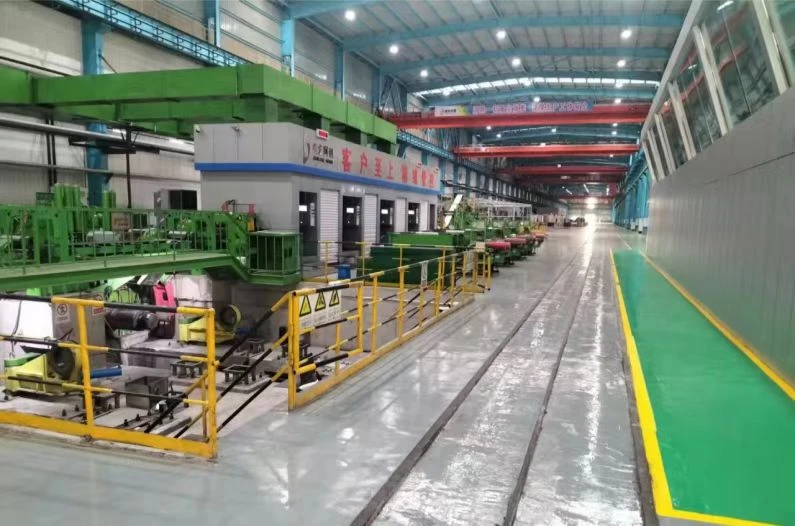
Inside the Temper Mill: Why Skin-Pass Still Makes or Breaks Coil Quality Walk any steel service center and you’ll notice the subtle difference: sheet that behaves on the press versus sheet that fights back. That line is often drawn at the temper rolling mill . To be honest, I’ve seen mills that look glamorous on a glossy brochure yet stumble on flatness, and I’ve seen lean, no-drama lines that deliver coils operators actually love. This one, branded simply “Temper Mill,” comes out of No.1518, LAR Valley Int'l, Guangwai Avenue, Xicheng District, Beijing, 100055—and it’s built for the real grind. What’s driving demand (and upgrades) right now EV body panels, thinner-gauge appliances, and cleaner packaging steels. That’s the trifecta. Trends I’m watching: closed-loop AGC/AFC with shape meters, EDT/shot-blasted roll textures for dialed-in Ra, and smarter energy use (regenerative drives, better lube capture). Many customers say they’re chasing fewer press breaks and a tighter cosmetic window—makes sense, margins are in the last 0.5% of quality. Process flow (real-world) Material: low-carbon CR, IF, HSLA; tinplate stock; galvanized substrates. Entry: coil car → uncoiler → end welder → accumulator (optional). Cleaning/brush: alkaline or electrolytic; pre-rinse to cut carryover. Temper pass: 4Hi/6Hi stand; reduction ≈0.3–2.0% (soft reduction up to ≈3%). Flatness control: work-roll bending, intermediate roll shifting, shape meter feedback. Oiling/finishing: electrostatic oiler; surface Ra set by roll texture. Inspection: offline light table + on-line surface/shape monitors. Testing: tensile per ASTM A370, hardness per ASTM E18, Ra per ISO 4287/4288, flatness per EN 10131. Key specifications (Temper Mill) Origin No.1518, LAR Valley Int’l, Guangwai Ave, Xicheng, Beijing, 100055 Thickness range ≈0.20–3.0 mm (real-world use may vary by grade) Max strip width ≈1,850 mm Line speed Up to ≈1,200 m/min Reduction (skin-pass) ≈0.3–2.0% (soft reduction mode to ≈3%) Stand configuration 4Hi or 6Hi; single or twin stand Surface finish target Ra ≈0.4–1.6 μm (via EDT/shot-blast rolls) Automation AGC/AFC, shape meter, auto recipe & coil reports Why it matters (benefits you feel on the press) Eliminates yield point elongation “terrace,” improving deep-draw behavior. Cleans and textures the surface for predictable lubrication and paint. Levels out flatness/straightness; fewer wrinkling and edge-wave complaints. Soft reduction option tweaks thickness and mechanical properties. Vendor snapshot (quick compare) Vendor Mill Type Max Width Automation Certs Lead Time Temper Mill (Beijing) 4Hi/6Hi, single/twin ≈1,850 mm AGC/AFC, shape meter ISO 9001, CE (project-based) ≈5–8 months EU OEM A 6Hi twin ≈2,000 mm Advanced shape/AI advisory ISO 9001, CE ≈9–14 months Japan OEM B 4Hi single ≈1,600 mm AGC, expert systems ISO 9001 ≈6–10 months Applications and customization Automotive outers and reinforcements, appliance doors, tinplate/food packaging, construction sheet, pre-paint lines. Custom options: roll texturing (EDT levels), twin-stand for higher elongation, electrolytic cleaning, static/dynamic oilers, coil weights up to ≈35 t, and IEC 60204-1 compliant electricals. If you’re swapping substrates often, recipe libraries are a sanity saver. Field notes, tests, and service life In trials I reviewed, elongation bump was ≈2–4%, Ra held within ±0.15 μm, and flatness under ≈10 I-units on 0.8 mm IF steel. Yield-point marks vanished after a single pass. Typical service life: work rolls 8,000–15,000 t between grinds; bearings >50,000 h; line frames 15–20 years with scheduled overhauls. Certifications commonly requested: ISO 9001 factory QA, CE marking for the line, and UL 508A on control panels (region-dependent). Two quick case studies Automotive tier-1 (EU): press splits on exposed panels dropped by ≈30% after moving to a temper rolling mill recipe with 1.2% reduction and Ra ≈0.9 μm. Appliance maker (MENA): coil waviness complaints fell from 7 to 1 per month once shape meter feedback was enabled on the temper rolling mill . Operators told me the “feel” of the sheet changed—less springback, more predictable lubrication pickup. Surprisingly, small tweaks in roll texture did more than big tweaks in reduction. I guess experience still beats any manual. References ASTM A370 – Standard Test Methods for Tension Testing of Metallic Materials. ASTM E18 – Standard Test Methods for Rockwell Hardness of Metallic Materials. ISO 4287/4288 – Surface texture: Profile method; rules and parameters (Ra, Rz). EN 10131 – Cold rolled uncoated low carbon steel flat products—Tolerances (flatness). IEC 60204-1 – Safety of machinery—Electrical equipment of machines.

We have successfully executed over 500
projects around the world,
many first-of-their-kind
research projects and products in China, including
We have successfully executed over 500
projects around the world,
many first-of-their-kind
research projects and products in China, including
-
2004
The 1st hydraulic AGC system for hot rolling of ribbon steel
-
2006
The 1st AFC system used for 1450mm skin pass mill
-
2009
The 1st 5-stand tandem line with 2-stand POR & Uncoiler for 650mm ribbon steel
-
2012
The 1st reversing mill for 1380mm strip
-
2016
The 1st soft-rolling system used in skin pass mill
-
2019
The 1st fully automated medium-width tandem cold rolling mill
-
2021
The 1st 5000KN Twin-stand double skin pass mill
-
2022
The 1st coupled pickling line & tandem cold mill with two modes - big roller & small roller

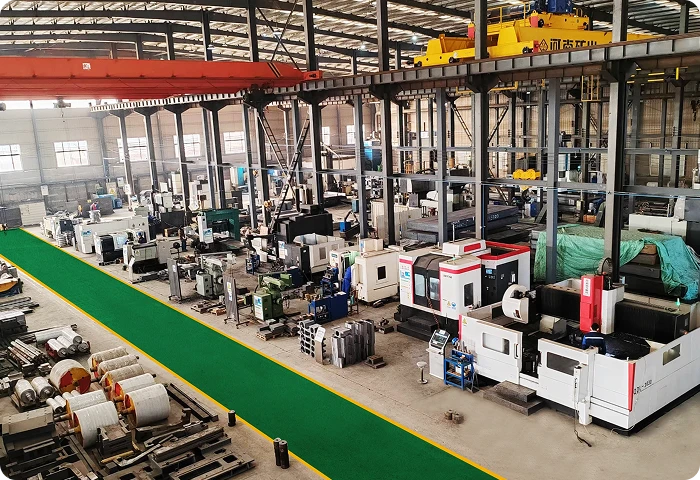
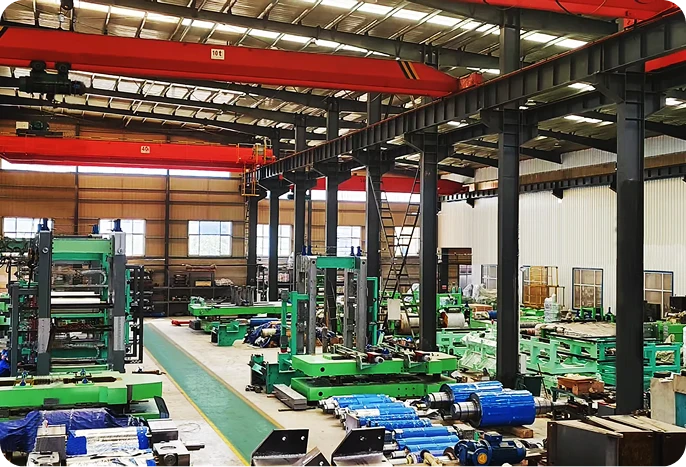
Yang Wang Li Xin operates a state-of-the-art facility over 66,000 square meters,and our manufacturing facility is fully equipped with high-tech machinery and high-capacity cranes. This enables us to handle large work pieces measuring 4.5m in width, 10m in length, and 1.5m in height, guaranteeing our capacity to produce 1800mm skin-pass mills and 1450mm rolling mills. The individual piece can weigh up to 100 tons.


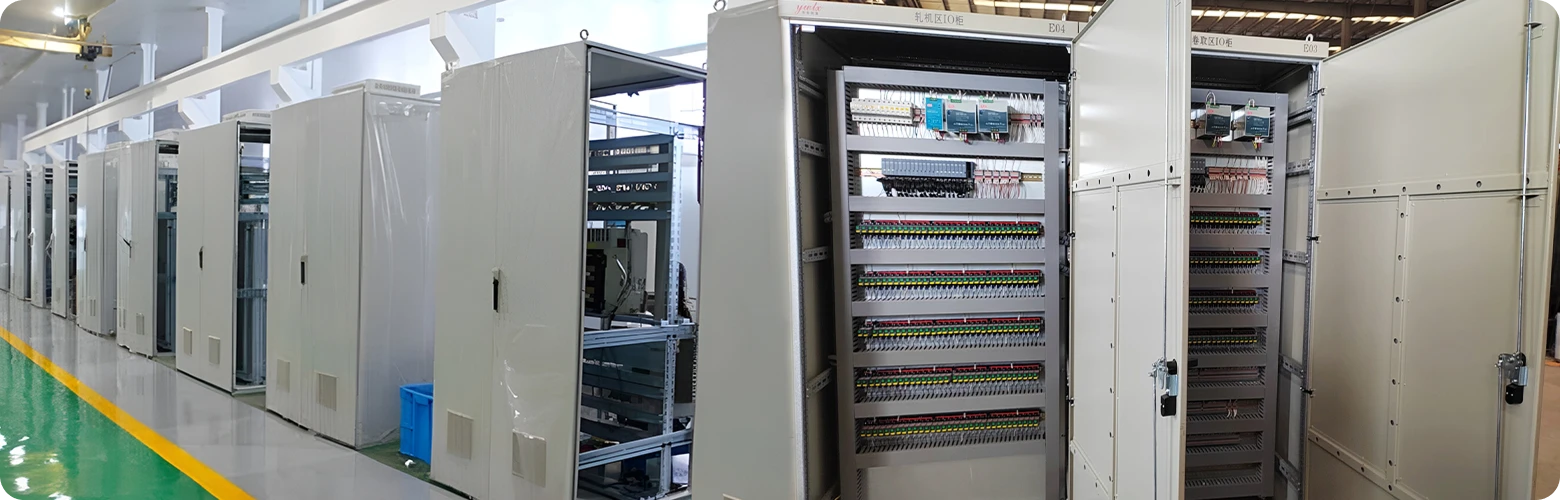
Quality is fundamental to the enterprise survival. We have established a comprehensive and meticulous quality management system and have successfully obtained ISO14000 certification. Starting from the design source, it supervises the entire production cycle, including design, procurement, processing, assembly, in-factory testing, installation, and online commissioning. The workshop is equipped with measuring tools like vernier calipers, spectrometers, hardness testers, and ultrasonic flaw detectors. They are used to check materials and control tolerances to ensure the final equipment meets or exceeds requirements. All products have a unique code, This enables the easy identification and traceability of the equipment components and ensures full control of quality.


-
 proceso de laminador en frío 6 hiThe Cold Rolling Process Understanding the 6-Hi Mill Configuration The cold rolling process is a vital industrial technique used to reduce the thickness of metal sheets and strips, enhancing their mechanical properties and surface finish. Among various mill configurations, the 6-high (6-Hi) rolling mill is particularly noteworthy due to its unique design and capabilities. This article delves into
 -
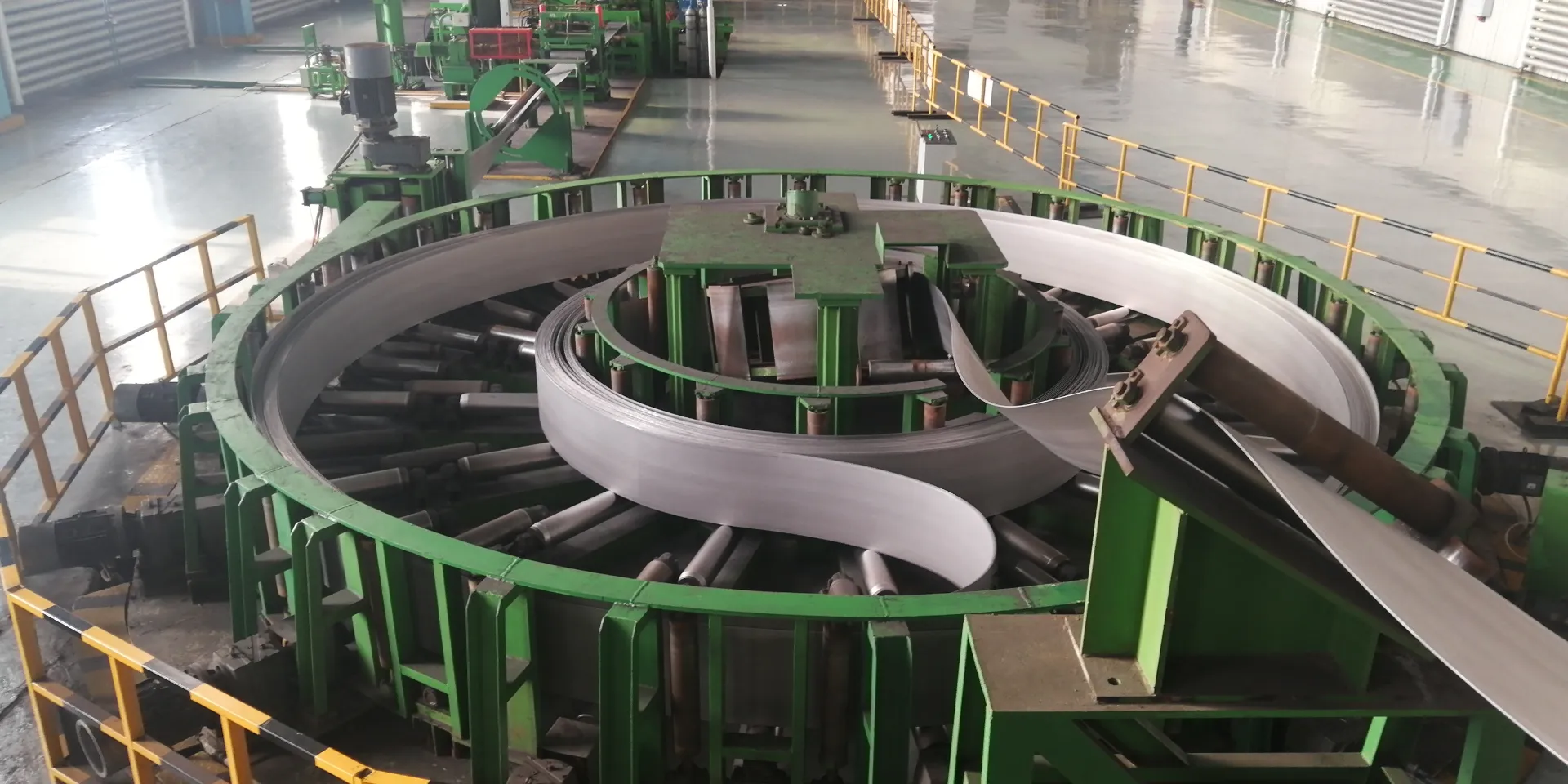 Skin Pass Mill: Enhancing Steel Sheet Quality and PerformanceThe skin pass mill , also known as a temper mill, is a critical piece of equipment in the steel manufacturing process. It plays a vital role in improving the surface quality, mechanical properties, and flatness of steel sheets and strips. This article explores the function, process, and benefits of the skin pass mill , as well as its importance in various industries. What Is a Skin Pass Mill? A sk
 -
 прокатный стан на сталелитейном заводеIn the dynamic landscape of the steel industry, a rolling mill at a steel manufacturing plant stands as a pillar of precision engineering and expert craftsmanship. This pivotal equipment transforms molten steel into essential products used across numerous industries, reflecting not only the plant's capability but also its operational prowess. Rolling mills are the heart and soul of steel productio


